Retail · Self-checkout
Walmart Self Checkout
Fewer interruptions that need an associate at self-checkout: an interface proposal tested with customers.
Overview
At a self-checkout station, every time the system asks an associate for help the customer waits and checkout speed feels worse. The baseline reported in the analysis is that 25% of customers go through at least one assisted intervention, and those interventions show up as the root cause of a negative checkout-speed NPS.
Role & team
My role
Company: Walmart de México y Centroamérica · 2025
My contribution
From speeding up scanning to reducing interruptions
- I reframed the problem with the team: the root cause was assisted interventions, not just scanning speed.
- I worked on the in-store benchmark and the interventions product pitch, with four use cases.
- I designed the wine and spirits proposal: keep scanning and group the validation before payment.
- With Research and Content we designed the ideal interface and tested it with customers; I left recommendations and NPS levers (receipt and survey) for the next iteration.
The challenge
How do we improve checkout speed with the stations already in store, reducing the interventions that need an associate, to raise NPS and self-checkout adoption?
Problems we faced
- Baseline: 25% of customers go through at least one assisted intervention (pharmacy discount, wine and spirits, item or cart cancellation, weight variation, unknown item).
- For wine and spirits, every scan opens a window that stops the purchase: customers can't keep scanning until an associate arrives.
- Customers scan and barely interact with digital content; they skip the Benefits banner because they mistake it for advertising.
- People who avoid self-checkout point to navigation autonomy, communication, cart size and not covering their needs.
Process & decisions
- We changed the approach: instead of only speeding up scanning, we worked on the interruptions that need an associate, because they were the root cause of a negative checkout-speed NPS.
- In-store benchmark (La Comer, Fresko, City Market, Soriana, Costco and Nutrisa) to see how each one handles interventions. In some of them, wine and spirits validation is self-service and doesn't stop the customer.
- A product pitch with four intervention use cases: wine and spirits, pharmacy discount, remove item and remove cart. Wine and spirits is the one developed in detail.
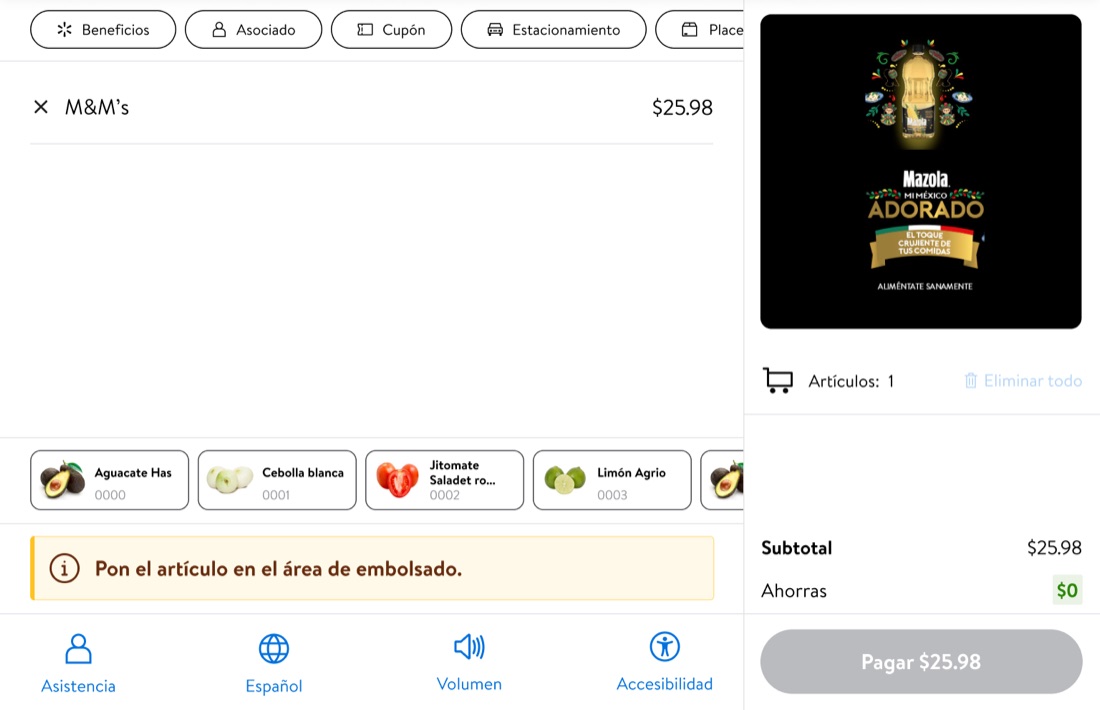
- Wine and spirits: the customer scans and keeps shopping, the item is flagged and, before paying, a single notice informs them and alerts the attendant, who asks for ID and releases the purchase. Age verification is met without stopping every scan.
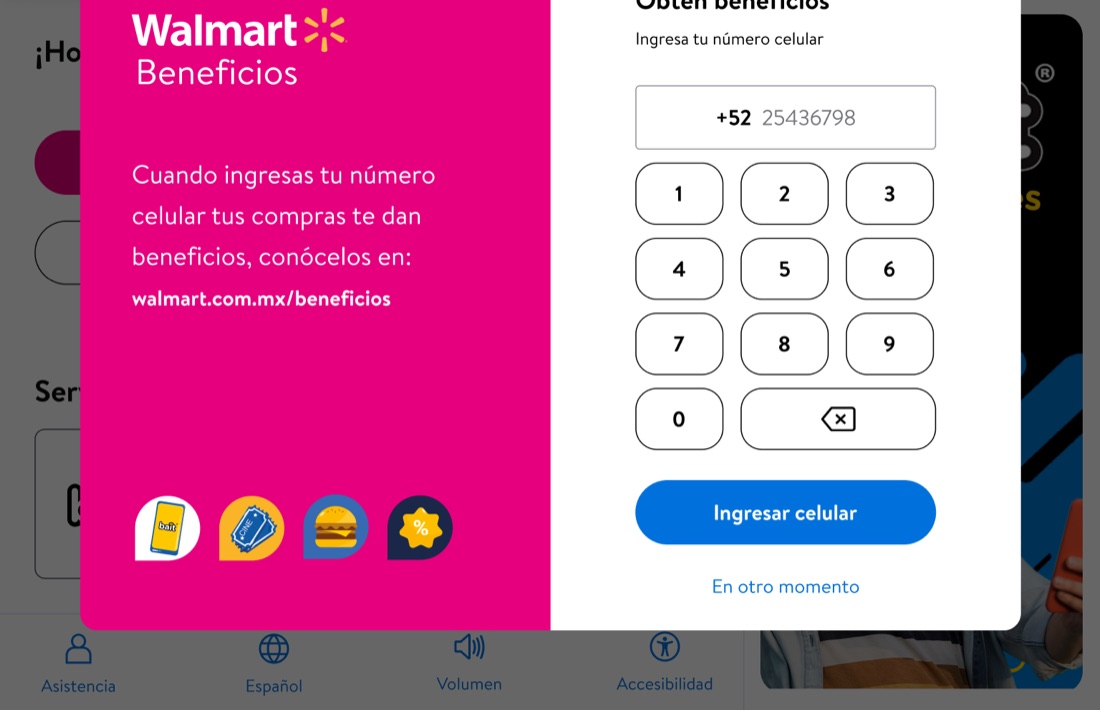
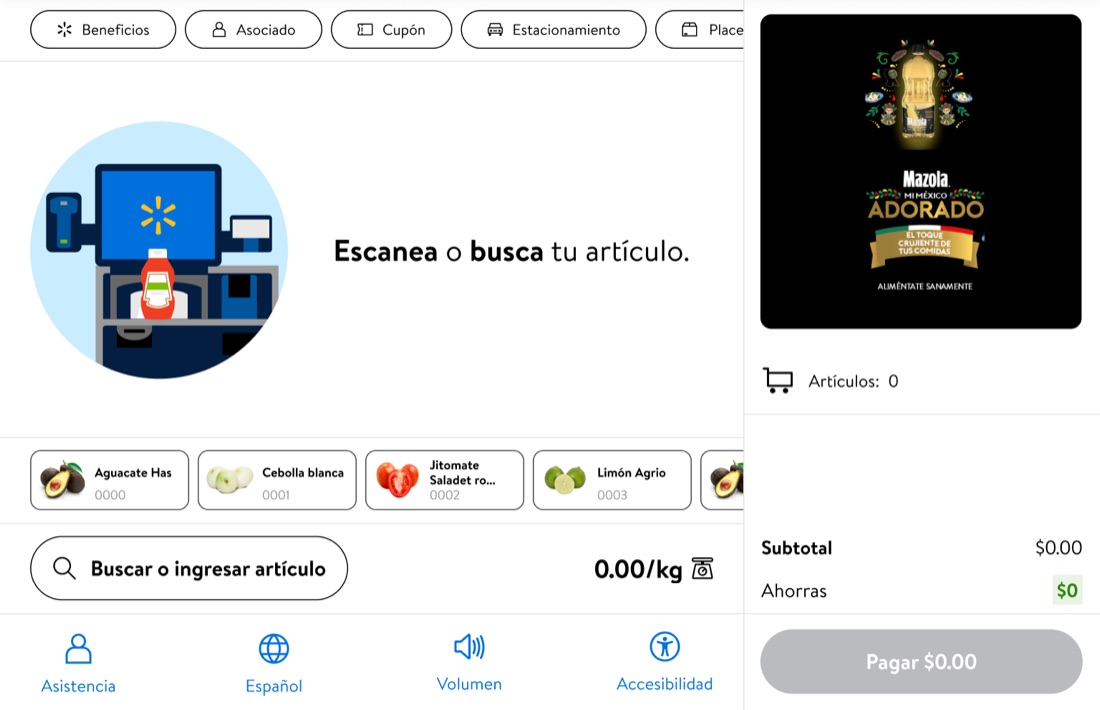
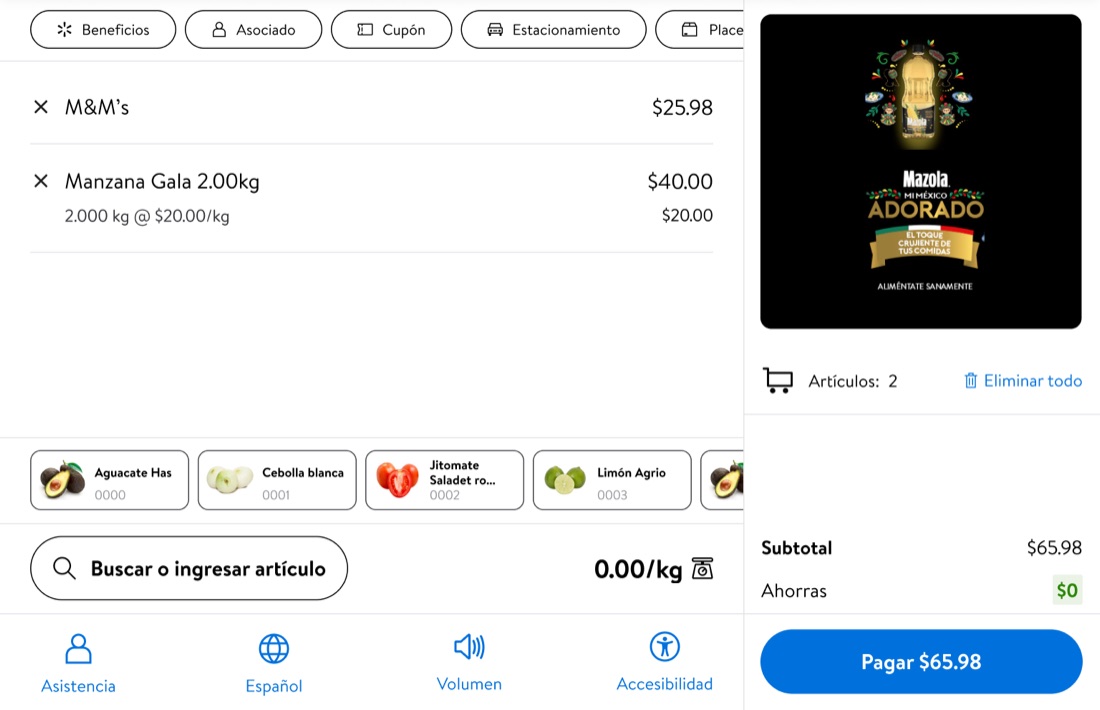
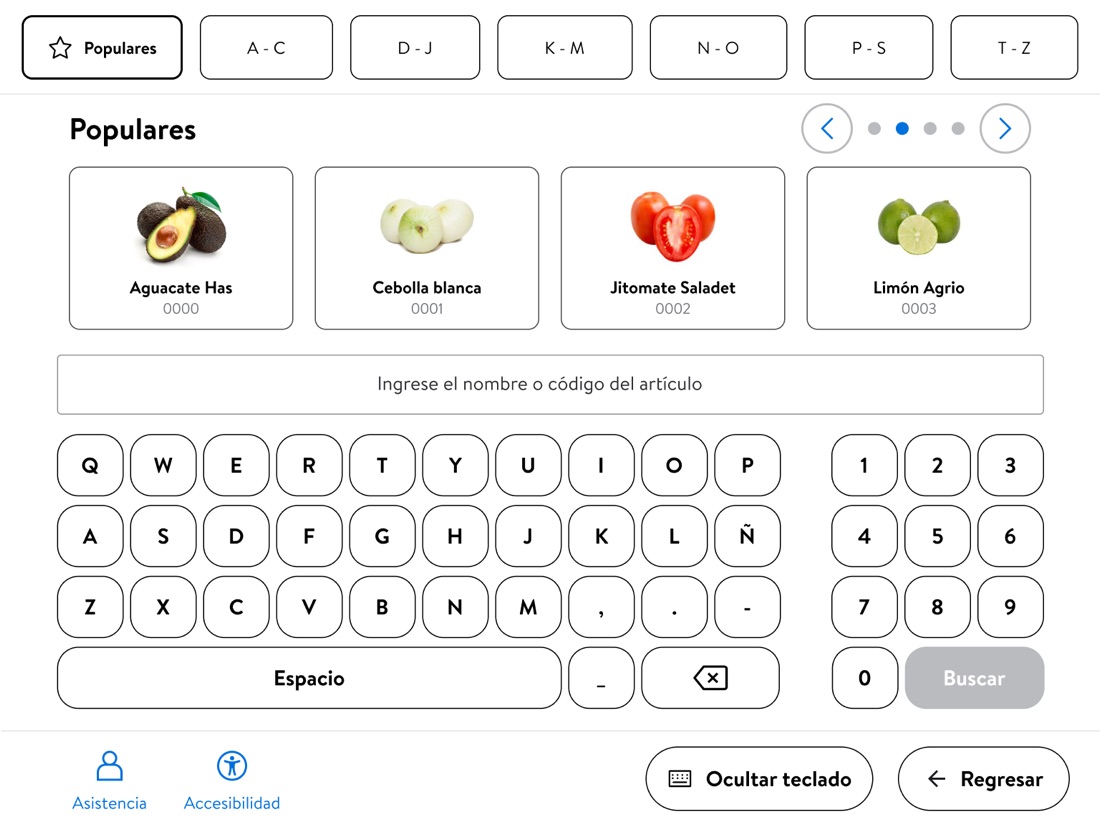
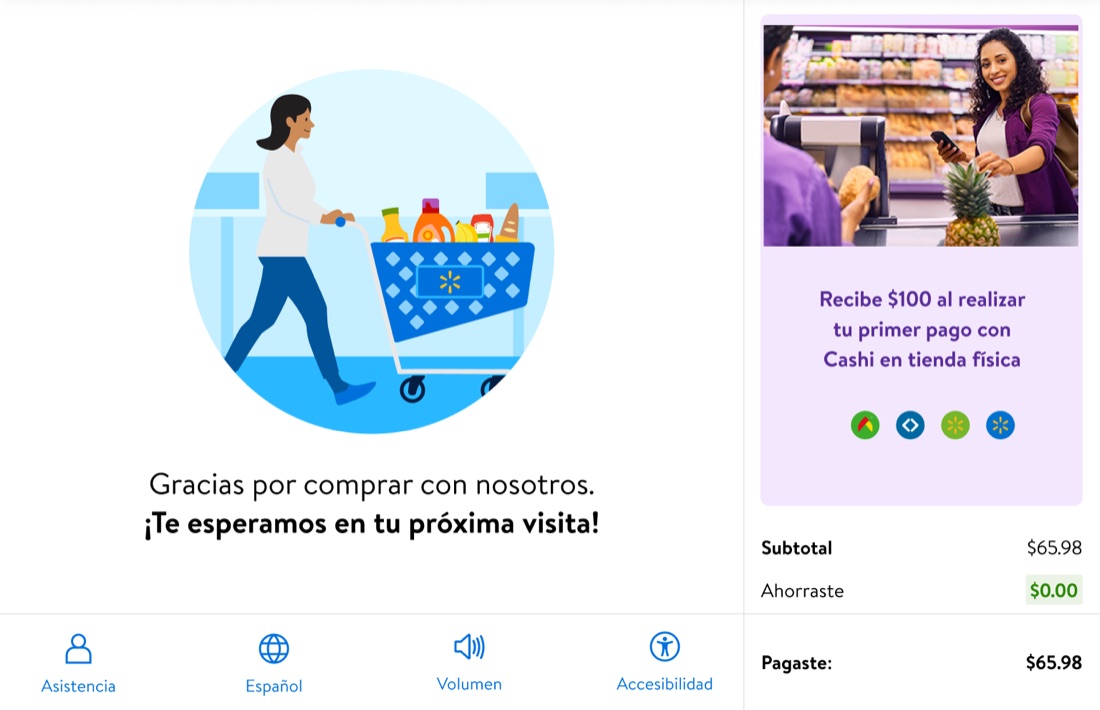
- An ideal version of the self-checkout interface, tested with customers: Home, Benefits, cart, before you pay, interventions, payment method and thank-you screen.
- NPS levers inside the interface: the receipt (SMS or printed) and the survey with reasons such as checkout speed, service, low prices and availability.
Screens
Swipe to see more. Tap a screen to open it full size.
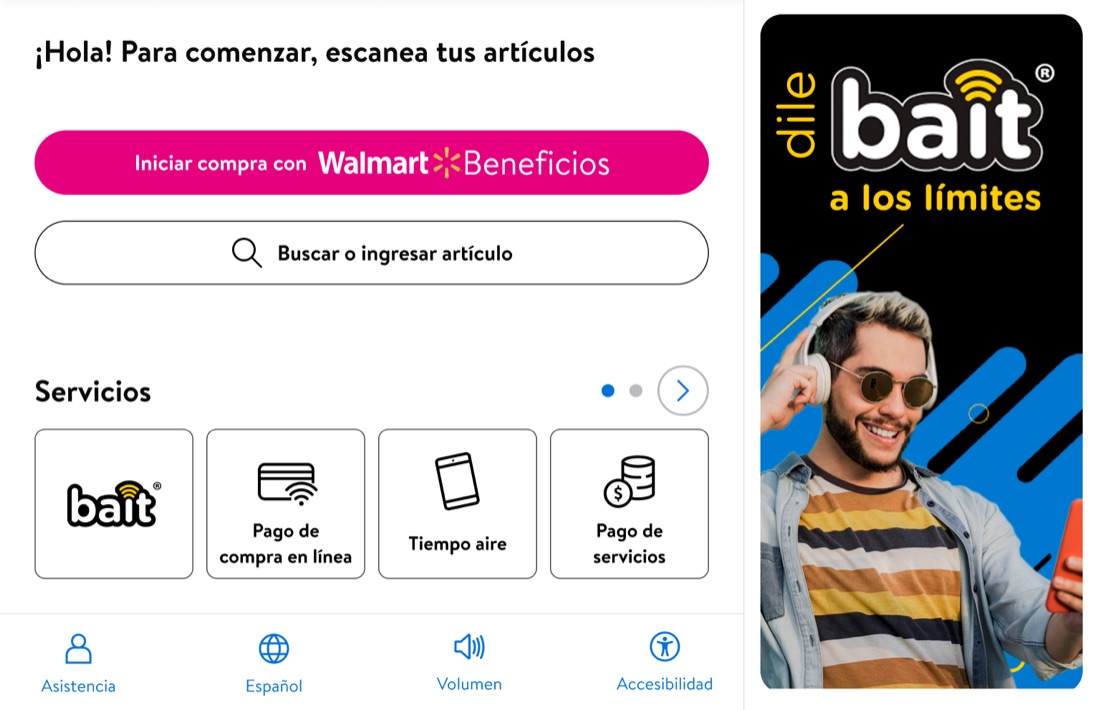
Results
- Design deliverable: the wine and spirits proposal and the ideal interface, with the four intervention use cases documented in the product pitch.
- Test finding: customers rated the usefulness (4.42) and appeal (4.08) of the proposal's ecosystems, such as Benefits and Cashi, on a 0 to 5 scale.
- Test finding: entering the Benefits phone number before paying was perceived as a friendly reminder, not an interruption.
- Test finding: the cart added clarity, with the applied promotion, the previous and new price, and the total saved. The quantity selector avoids scanning the same item several times.
- Test finding: focused on finishing the purchase, customers forgot the pending step of an intervention. Recommendation: omit the action buttons on the notice and adjust its size and position.
- Recommendations for the next iteration: separate the QR code from the traditional payment methods and simplify the receipt choice to a single screen.
Status: design proposal tested with customers; there are no production metrics. My work on the nationwide rollout of the POS and self-checkout products is the program's scope, not the status of this proposal.
Spin by OXXO Home